Daily Life Practice
Mindfulness off the cushion, in an ordinary day
The sutta on clear comprehension names four places where practice happens off the cushion. An ordinary working day contains all four, several times, for free.
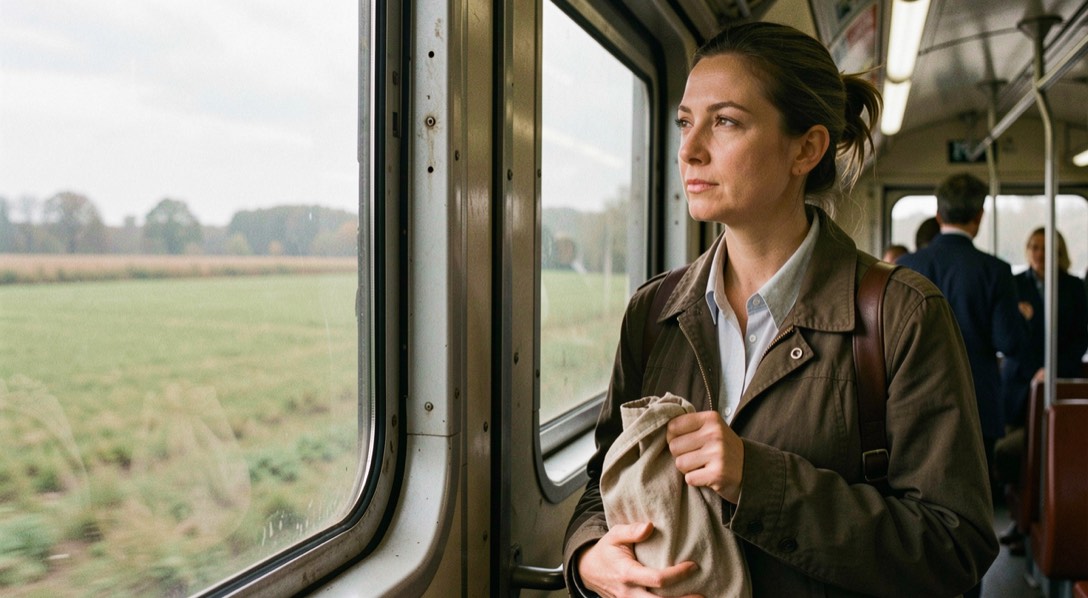
The phrase "mindfulness in daily life" has been stretched to mean almost anything, from eating slowly to savoring a latte. The canon’s version is smaller, stranger and more usable. In the Satipatthana Sutta (MN 10), inside the body section, sits a short instruction called clear comprehension of activities: in going forward and returning, in looking ahead and looking around, in bending and stretching, in wearing clothes and eating, in a dozen ordinary motions, one acts clearly comprehending. An ordinary day contains every item on that list. The problem is not scarcity of opportunity; it is that nobody taught us to count them.
The four questions behind clear comprehension
The commentaries unpack clear comprehension into four questions, and they are worth keeping because they survive translation intact: why am I doing this; does it suit my purpose; how does the body do it; and what is the mind doing while it happens. Asked at a kettle, they take four seconds. Asked at a keyboard, they take longer and pay more, because the "why" of an email is often the most interesting fact about it. The questions convert an activity from background noise into practice without stopping the activity, which is the whole trick. Nothing about them requires a cushion, a bell or an app.
A map of the ordinary day
| Activity | Foundation it trains | The small practice |
|---|---|---|
| waking, washing, dressing | body | feel the water’s temperature and the shirt’s weight; the sutta’s own examples |
| the commute | body, then feelings | walking with the feet known platform to platform, or the breath known through one stop |
| work with people | mind | before replying, one glance: is the mind with or without ill will right now |
| the phone in the palm | feelings | notice the pull before the thumb moves; name the feeling in one word |
| the meal | body | the sutta’s wisdom of eating: enough to keep going, not enough to carry |
| waiting, in any line | body | the queue as three free breaths; the delay as a sitting nobody scheduled |
Read the table as an offer, not an exam. A working day offers perhaps a dozen clean moments, and catching three of them is a day of real practice. The evening reflection described in the evening reflection is where those catches get recorded, and the Dhamma notebook is where they stop being anecdotes and become a trend line.
What the practice is for, and what it is not for
Clear comprehension has a direction. In the sutta it sits inside a path aimed at dispassion and release, which means the point of knowing the shirt’s weight is not efficiency, optimization or calm as a product feature. Off cushion practice is not a productivity system with incense. It will not make the commute shorter, the boss wiser or the news bearable; promises in that key are made by apps, not suttas. What it does do is close the gap between the person sitting at 6:30 and the person living at 9:15, so that one mind runs both shifts. That continuity is exactly what the classical image of a single well swept path describes, and it is measurable: the sit feeds the day, the day’s notes feed the sit.
A checklist for starting tomorrow
Two anchors, then a third
- Choose two fixed daily events as anchors: one bodily (washing, stairs, kettle), one interpersonal (the first reply of the workday).
- Run the four questions at each anchor for a week; keep the answers out loud to nobody.
- When the phone lifts the hand, pause one breath before the unlock; that breath is the whole practice of the feeling foundation on most days.
- Record catches nightly, in the notebook, as counts and one word each.
- Add a third anchor only when the first two survived a full working week.
Common mistakes
The first mistake is totalizing: trying to be mindful of everything, all day, which is the road to a headache and an abandoned practice in a fortnight. Two anchors beat a vague aspiration to constant awareness. The second is converting the practice into performance, narrating one’s mindfulness to colleagues or, worse, correcting others’ tea drinking; the sutta’s clear comprehension is about the wearer of the shirt, not the wearer’s household. The third is using daily life practice to dodge sitting, as if standing at a platform breathing were the same as the first tetrad; the guides on this site keep the sitting as the engine, from the thirty minute daily sitting onward, and the day as its application. The fourth is treating distraction as failure in the moment, when noticing distraction is the moment the practice was aiming at all along.
If you take one thing from this guide
Take the kettle, or whatever your morning’s version of it is. Choose the two anchors tonight, run the four questions tomorrow, and let the notebook collect the evidence for a week before you judge the experiment. Ordinary days were the canon’s original venue: farmers and merchants practiced between obligations, and the instructions have been waiting for commuters ever since. The day will still be ordinary. That was never the problem.