Suttas Made Accessible
The Kalama Sutta (AN 3.65) and how to read it
The Kalama Sutta is quoted everywhere and read rarely. Read whole, it is not a license to believe nothing: it is a method for testing teachings by what shows up in a life.
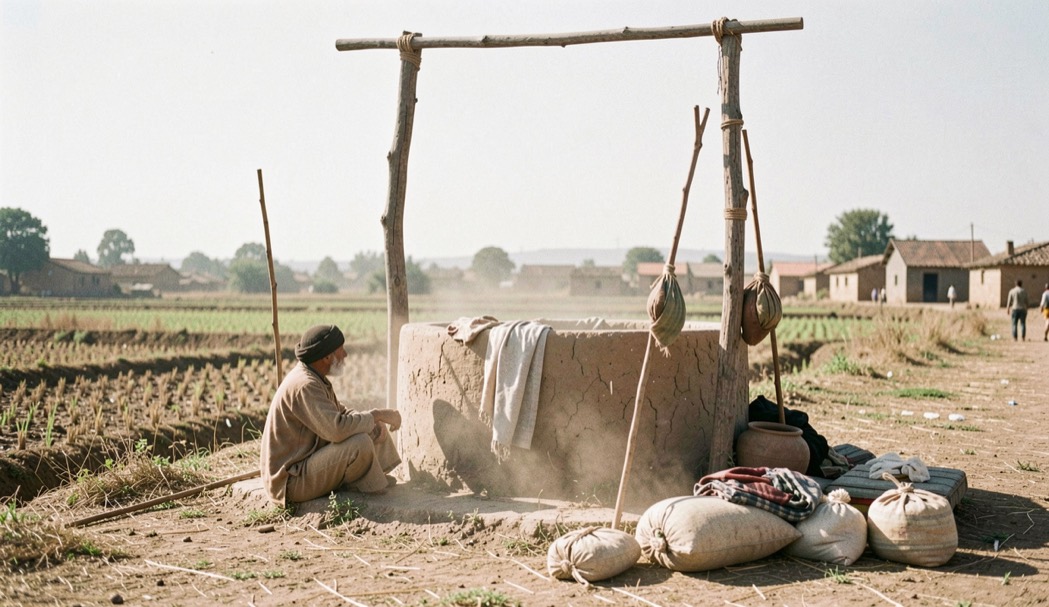
Of all the discourses, the Kalama Sutta (AN 3.65) may be the most quoted and least read. Its famous checklist, do not go by hearsay, by lineage, by scripture, appears in essays, on posters and in prefaces to books that then go on to require considerable faith. The sutta itself is short, set in a specific village, and ends in a place almost none of its quoters mention. This guide reads it whole, because the whole is both more demanding and more comforting than the quote.
The situation in Kesaputta
The Kalamas, householders of the town of Kesaputta, have a practical problem: teachers keep passing through, each praising his own doctrine and pulling down the doctrines of others, and the villagers no longer know whom to believe. Notice what they are not asking. They are not asking what is true in the abstract; they are asking how to handle a marketplace of competing claims, which is the exact situation of anyone browsing teaching online today. The Buddha’s answer does not begin with a doctrine at all. It begins by taking an honest inventory of what actually goes on in a person.
The test: greed, hate, delusion
Do not go by oral transmission, by lineage of texts, by report, by the authority of scriptures, by logical inference, by philosophical consistency, by plausible appearance, by agreement with your own settled view, or by the respectability of a teacher. Instead, he says, when you know for yourselves that these things are unskillful, blameworthy, censured by the wise, and undertaken lead to harm and suffering, then abandon them; and when you know for yourselves that they are skillful, blameless, praised by the wise, and undertaken lead to welfare and happiness, then adopt them. The knowing is then made concrete with a short inventory: when greed is present in a mind, does it lead to harm or welfare; when hate is present; when delusion. The criterion is observable consequence, checked against people whose clarity you can verify. The closing sentence of the passage is often left off, and it belongs to the method: free of greed, hate and delusion, a person lives without harmful conduct, and that is visible to anyone.
| Question | Where to look | A skillful sign |
|---|---|---|
| Does it feed greed? | what you acquire, grasp at, or defend after contact with the teaching | less grasping, easier generosity |
| Does it feed ill will? | irritation, contempt, us and them talk that arrives with it | easier patience, less scorekeeping |
| Does it feed delusion? | confusion increased, questions forbidden, accounts that cannot be checked | clarity, and references you can verify |
| What do the clear say? | people you know to be kind and honest, not merely credentialed | independent praise from independent lives |
| What does it produce? | your own conduct weeks later, which is the part only you can audit | conduct you are not ashamed of |
The four assurances the sutta ends with
Then comes the part the posters omit, and for lay practitioners it is the most valuable passage in the discourse. The Buddha offers the Kalamas four assurances. If what he has said turns out true and there is a world beyond, there is the fruit of good conduct after death. If there is no world beyond, the person who lives without ill will in this life is already happy here, free of hostility. If evil deeds brought no result, one remains undefiled anyway. And if they do bear fruit, one who does none stands pure either way. The assurance is not epistemology, it is a release from fear: a life examined with this test is safe under every possible outcome. That is why the sutta sits at the head of this notebook’s reading path rather than in a footnote, and why the evening reflection borrows its tone: the point was never to win arguments, it was to live a life that audits cleanly.
A checklist for testing a teaching
Once a quarter, on one teaching you follow
- Name the teaching in one sentence, with its source and reference if it claims a canonical one.
- Inventory greed: list what following it has made you want to acquire or keep.
- Inventory ill will: note who has become harder to love since you followed it.
- Inventory delusion: write the questions it forbids or cannot answer.
- Ask one clear eyed friend outside the group what they observe in you.
- Decide in writing: adopt, continue with eyes open, or set down.
Common mistakes
The first mistake is quoting the checklist against the sutta itself, as if a discourse that ends with assurances about rebirth and karma were an anthem of disbelief; the Kalamas were told not to accept authority as the only reason, not to refuse every reason. The second is using the test on what is difficult and never on what is comfortable, which turns a mirror into a flashlight pointed elsewhere. The third is quietly substituting "praised by the wise" with "praised by my crowd", when the Buddha’s phrase points at people whose freedom from greed, hate and delusion you can observe. The fourth is skipping the inventory and leaping straight to conclusions, which is hearsay with extra steps.
If you take one thing from this sutta
Take the inventory, not the poster. Once a quarter, run one teaching you follow through the five questions in the table, in writing, in the Dhamma notebook, and let the answer stand whether or not it is convenient. That is the whole discipline of AN 3.65, and it is stronger medicine than the quote suggests: it asks you to become the kind of person whose conclusions about teachers can be trusted, which is exactly what the Kalamas of Kesaputta were trying to be.