Meditation Practice
Maranasati: mindfulness of death as the suttas teach it
Two short discourses in the Book of Sixes teach the recollection of death, and neither of them is gloomy. One measures it in a single breath, the other sets it at dusk and dawn. Both fit an ordinary lay week.
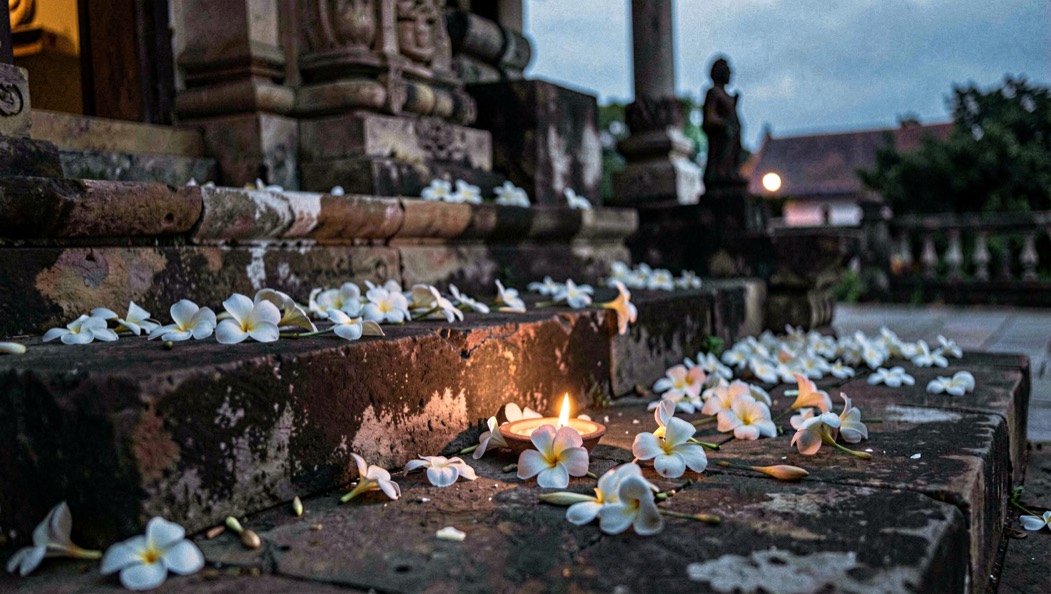
Maranasati (in Pali maranassati, from marana, death, and sati, mindfulness) is the recollection that one's own death is certain and its hour unknown, held in attention long enough to change what one does next. The canon teaches it most directly in two short discourses, AN 6.19 and AN 6.20, both set at Nadika in the brick hall, and both open with the same claim: mindfulness of death, developed and cultivated, is very fruitful and beneficial, and it has the deathless as its culmination. For a lay practitioner the practice is small and portable: one honest thought about dying, measured against one breath, followed by one question about what in the mind is still unfinished.
What does maranasati mean, and where is it taught?
The word is a plain compound. Marana is death; sati is the same mindfulness that runs through the breath practice and the four foundations, the faculty that remembers what it is doing. The sources come in three layers. The first is the suttas themselves: the pair in the Book of Sixes, a longer twin of the first discourse in the Book of Eights (AN 8.73), and the third of the five subjects for frequent recollection in AN 5.57, where a woman or a man, lay or ordained, reflects that they are subject to death and have not gone beyond it. The second layer is the commentarial manual, Buddhaghosa's Visuddhimagga, composed in Sri Lanka in the fifth century, which treats the recollection of death in its eighth chapter as one of the ten recollections. The third is living practice in the monasteries of Southeast Asia, where it remains a common subject. This page stays with the first two layers, because their words can be checked.
Maranasati at a glance
- Pali: maranassati, often written maranasati; English: mindfulness or recollection of death.
- Core suttas: AN 6.19 and AN 6.20, taught at Nadika in the brick hall; AN 8.73 repeats the first with eight answers.
- Related recollection: the third of the five subjects in AN 5.57, the Upajjhatthana Sutta.
- Commentary: Visuddhimagga, chapter VIII, with eight ways of recollecting death.
- Stated fruit: very fruitful and beneficial, with the deathless as its culmination.
How long is one breath? The six answers of AN 6.19
AN 6.19 is a conversation, and it reads in under five minutes in Bhikkhu Sujato's translation of AN 6.19. The Buddha asks the monks whether they develop mindfulness of death, and six of them answer in turn. Each describes the same wish, if only I could live this long, I would attend to the Teacher's instructions and accomplish a great deal, but each measures the span differently, from a full day and night down to a single breath. The verdict divides them cleanly. The first four live heedlessly and develop the recollection slackly. The last two live heedfully and develop it keenly for the ending of the defilements.
| Monk | The span he wishes for | Verdict |
|---|---|---|
| 1 | a day and a night | heedless, developed slackly |
| 2 | a single day | heedless, developed slackly |
| 3 | the time it takes to eat one meal of almsfood | heedless, developed slackly |
| 4 | the time it takes to chew and swallow four or five mouthfuls | heedless, developed slackly |
| 5 | the time it takes to chew and swallow one mouthful | heedful, developed keenly |
| 6 | the time from an in breath to an out breath, or from an out breath to an in breath | heedful, developed keenly |
The Book of Eights repeats the scene in AN 8.73 with eight monks, adding half a day and half a meal, and the dividing line falls in exactly the same place. What the table teaches is not arithmetic. A day feels like a reprieve, and a reprieve invites postponement. A mouthful or a breath leaves nothing to postpone into. The recollection works when the span is short enough that the next act is the only act left, which is why the strongest answer is measured in the very unit that the sixteen steps of breath meditation already train. MN 62 makes the same connection from the other side: breathing developed in that way means that even the final breaths are known as they cease, not unknown.
What does AN 6.20 add to the practice?
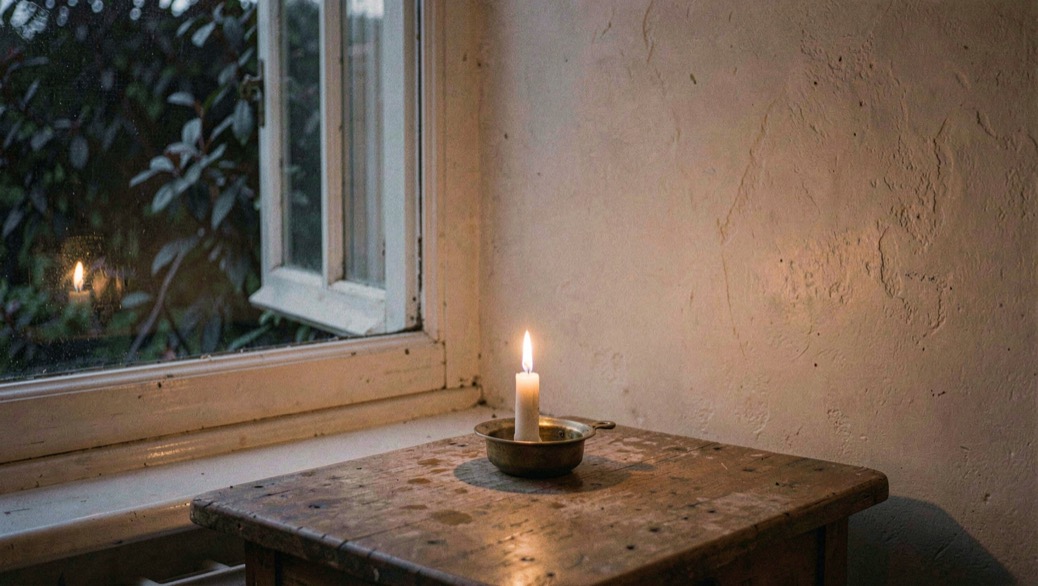
The second discourse turns the recollection into a review with a fixed hour. As day passes and night draws close, the monk reflects that death could come from many causes: a snake might bite, a scorpion or a centipede might sting, one might fall, the food one has eaten might go wrong, bile, phlegm or the sharp winds of the body might be disturbed. Then comes the question that makes the practice useful rather than morbid: are there bad, unskillful qualities not yet given up that would be an obstacle if death came tonight? If there are, the sutta asks for the effort of a person whose clothes or head are on fire. If there are none, the monk is told to meditate with rapture and joy, training day and night in skillful qualities. The same review is repeated as night passes and day draws close, with today in place of tonight.
Two details are easy to miss. The list of causes is ordinary, almost domestic: nothing in it is a battle or a plague, only the small accidents of a village evening. And the second branch, the one for a mind that finds nothing left to abandon, ends in gladness. The recollection of death in the canon is not designed to produce dread. It is designed to leave a clean desk at the end of each day.
How did the Visuddhimagga expand it?
Buddhaghosa's manual treats the recollection of death as a meditation subject in its own right, and for the practitioner whose attention will not settle on the bare thought, it offers eight ways of bringing death to mind. In Bhikkhu Nanamoli's English they are: as having the appearance of a murderer, as the ruin of success, by comparison, as to sharing the body with many, as to the frailty of life, as signless, as to the limitedness of the extent, and as to the shortness of the moment. The murderer is death walking beside a person from birth. The ruin of success is health, wealth and standing undone at once. The comparison is with the great and the awakened, who also died. Signless means that death keeps no appointment, and the last two shrink the span until a life is measured in moments, a commentarial echo of the breath answer in AN 6.19. A lay reader does not need all eight. One or two, chosen honestly and kept for a season, carry most of the weight.
Is maranasati the same as the charnel ground contemplations?
No, though the two are neighbors. The charnel ground contemplations of MN 10 belong to the first foundation, contemplation of the body: the practitioner compares this living body with a corpse at nine stages of decay, from swollen and discolored to bones crumbling into dust. Maranasati is a recollection, a fact held in attention, and it needs no image at all. The map of the four foundations of mindfulness already explains why this notebook does not press the charnel ground on lay readers. The recollection is the gentler door to the same truth, and it can be walked through on a bus, at a desk or at the end of a meal.
How can a lay practitioner practice it this week?
The two discourses already supply a timetable: a breath length recollection during the day, and a review at dusk and at dawn. A household version keeps both and makes each smaller. In the morning, after the sitting and before the phone, take one breath with the plain thought that this day is not guaranteed, then name one thing that would be left undone. In the evening, fold the AN 6.20 question into the evening reflection before sleep: is there a resentment, an unmade apology or an unkind habit that would be an obstacle if tonight were the last night? Answer in one line. If the answer is yes, tomorrow's first adjustment is decided. If the answer is no, the sutta's own instruction applies, and the right response is gladness rather than further searching.
Five minutes of maranasati, morning and evening
- Morning: one full breath, in and out, with the thought that this breath is not owed to anyone.
- Morning: one line in the notebook naming what would be left unfinished today.
- Evening: read the AN 6.20 list of causes once, slowly, as ordinary accidents rather than threats.
- Evening: ask the single question about unabandoned qualities, and answer it in one line.
- Weekly: recite the five subjects of AN 5.57 aloud, at the pace of one breath each.
Common mistakes
The first mistake is mood production: trying to feel the gravity of death on schedule and judging the practice by the intensity of the feeling. The suttas ask for a question to be answered, not an emotion to be generated. The second is the long span: telling oneself that life is short and then planning the response for next month, which is precisely the heedlessness AN 6.19 finds in its first four answers. The third is collecting fuel, morbid news, accident figures and the funerals of strangers, as though the recollection needed feeding; the list in AN 6.20 is deliberately plain. The fourth is taking up the practice in a season of fresh grief or low mood. A recollection meant to sharpen attention can weigh heavily on a mind already carrying a loss, and in such a season it is wiser to keep to the breath and to talk with a teacher, a friend or, where needed, a clinician before returning to it.
If you take one thing from these discourses
Take the shortest span. Not a day, not a meal: one breath, in and out, with the plain knowledge that it is not guaranteed, and then the next thing done as if it mattered. The Dhammapada gives the household result in its sixth verse: those who realize that we must all die settle their quarrels. That is the honest test of a working maranasati in a family. It is not that death feels closer. It is that the evening finds fewer things left unsaid.
Questions readers ask about maranasati
Is maranasati a morbid practice?
Not as the suttas teach it. AN 6.20 ends in rapture and joy for the practitioner who finds nothing left to abandon, and both discourses call the recollection very fruitful, with the deathless as its culmination. Its aim is diligence, appamada, not fear.
How long should mindfulness of death take each day?
The canon measures it in breaths rather than minutes. AN 6.19 praises the monk who recollects death over the span of one in breath and out breath. A lay practice of one breath in the morning and one question at night, a few minutes in all, is faithful to that measure.
Which sutta should I read first on mindfulness of death?
Read AN 6.19 first, for the six answers and the verdict, then AN 6.20 for the review at dusk and dawn. AN 5.57 places death among the five subjects for frequent recollection, and the eighth chapter of the Visuddhimagga supplies the eight ways for readers who want a commentary.