Daily Life Practice
Lifestyle as practice: a lay Dhamma notebook
Lifestyle, in a Theravada reading, is not decoration but the daily container of practice: sleep, speech, work, and the small rituals that hold a life together.
Lifestyle, in a Theravada reading, is not decoration. It is the container that holds practice: how a person sleeps, eats, speaks, works, and returns home. When the container leaks, the sitting on the cushion gets harder; when the container is tended, attention becomes steadier without extra effort.
The word "lifestyle" often arrives with a commercial accent, as if a life could be bought in a certain shape. In the suttas the concern is different. The Buddha praised moderation in eating, restraint in speech, and a dwelling that supports seclusion, not a dwelling that impresses. The point is not austerity for its own sake, but reducing the friction that scatters the mind. A lay practitioner in a city, with a job and a family, cannot copy the forest schedule. What can be copied is the logic: fewer inputs, clearer intentions, and a rhythm that repeats.
What does lifestyle mean in a contemplative frame?
In the Pali canon, the closest term is not a single word but a cluster: *sīla* (virtue in action), *santutthi* (contentment), *appicchatā* (wanting little), and *sappāya* (suitability). Suitability is the practical one. A suitable dwelling, a suitable friend, a suitable conversation. The question is not "is this lifestyle good?" but "does this arrangement support attention or exhaust it?"
This is where many practitioners get stuck. They treat lifestyle as a moral scoreboard, then swing between rigid rules and collapse. A more useful frame is experimental. Try a change for two weeks. Notice whether the mind is more or less scattered. Keep what steadies it. Drop what does not. The criterion is empirical, not aesthetic.
For readers who want a structured, practical treatment of daily habits, emotions, and transitions, there is material written for women navigating exactly this kind of overload, including a section on daily emotional balance that approaches the same territory from a secular, practical angle. The vocabulary differs from the suttas, but the underlying observation is familiar: the day is made of small decisions, and those decisions shape the mind that arrives at the cushion.
Which daily habits actually support a sitting practice?
Four habits carry most of the weight.
Sleep. The canonical texts treat wakefulness as a support, not a virtue to force. MN 10 lists the posture of lying down as a legitimate field of mindfulness. In practice, a fixed wake time does more for a sitting practice than a fixed bedtime. The body learns the rhythm; the mind stops negotiating every morning.
Speech. Right speech in MN 117 has four tests: true, beneficial, timely, and spoken with a mind of goodwill. Most people cannot audit every sentence, but they can audit one conversation a day. The evening review, a short recollection of what was said and why, is enough to change the next day's tone.
Work. The lay life is not a distraction from practice; it is the field. The Buddha's advice to Sigāla in DN 31 is unglamorous: do the work, do it well, do not neglect it, and do not let it consume the whole day. A practitioner who treats work as an obstacle will resent half of life. A practitioner who treats it as a training ground will find the hindrances waiting there, which is exactly where they can be seen.
Food. The reflection before eating in MN 10 is not a ritual of guilt. It is a short pause that separates hunger from habit. One meal a day eaten without a screen is a small, repeatable training.
How do you build a lifestyle that survives a busy week?
Start with the smallest unit that can survive a bad day. A thirty minute sitting is a fine goal, but a three minute sitting that actually happens is worth more than a thirty minute sitting that does not. Build the floor first, then raise the ceiling.
Anchor new habits to existing ones. After the morning coffee, before the first email. After the school drop off, before the commute. The anchor does the remembering, so willpower is not required every day.
Protect one input. Choose a single source of news, a single social feed, or a single podcast, and let the rest go quiet. The mind does not need more information; it needs fewer interruptions.
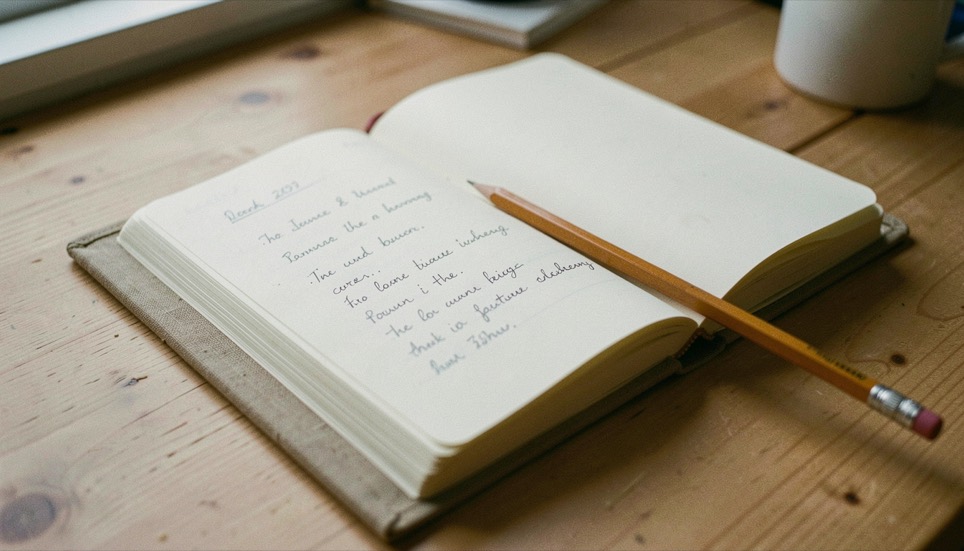
Protect one output. A short journal entry, three lines, written at the same time each day. The content matters less than the continuity. Over months, the entries become a record of the mind's weather, and patterns become visible that were invisible in the moment.
What about the modern vocabulary of self care?
The language of self care, burnout, and boundaries is not in the Pali canon, but the phenomena are not new. The hindrances named in AN 5.51 include restlessness and remorse, which is close to what a contemporary reader would call an overstimulated, self critical mind. The antidotes are also not new: calm the body, simplify the input, return to the breath, and act with goodwill rather than with resentment.
A useful discipline is to translate. When a modern article recommends a morning ritual, ask what it is doing for the mind. If it reduces scattering, it belongs. If it adds another performance to manage, it does not. The test is not the vocabulary; it is the effect.
The same applies to boundaries. Saying no is not a modern invention. It is a form of right speech, and it is often the most compassionate thing available in a household where everyone is tired.
How does lifestyle change across the decades of lay life?
The pressures shift. A woman in her thirties may be managing small children and an early career. A woman in her forties may be managing teenagers, aging parents, and a job that has become either a trap or a calling. A woman in her fifties may be managing a body that has changed, a household that has emptied, and a question about what the next twenty years are for.
The Dhamma does not offer a different teaching for each decade. It offers the same four noble truths, applied to a different set of conditions. What changes is the field of practice. What stays is the instruction: know suffering, let go of its cause, taste its ending, and walk the path.
A practical consequence is that a lifestyle built at thirty may not fit at fifty. The sitting time, the exercise, the friendships, the work arrangement: all of these may need to be rebuilt. Rebuilding is not failure. It is the same suitability question asked again, in a new body and a new household.
A short daily frame
Morning: three minutes of breath, before the phone. One intention for the day, spoken silently.
Midday: one meal without a screen. One sentence of gratitude, specific and small.
Evening: three lines in a notebook. What was done, what was felt, what will be different tomorrow.
Night: a short recollection of the day's speech. Not a verdict, just a look.
This frame is not a method for attaining anything. It is a way of keeping the container in repair, so that the deeper work has somewhere to happen. The cushion is where the mind is trained. The lifestyle is what makes the training possible, week after week, in an ordinary life.